
The Flight to Quality in the London Office Market
Office developers have faced unprecedented challenges in recent years and are struggling to keep up with demand for brand-new, high-quality office space. This has led to fierce competition among occupiers, perpetuating the shortage of best-in-class office space in London and creating upward pressure on rents.
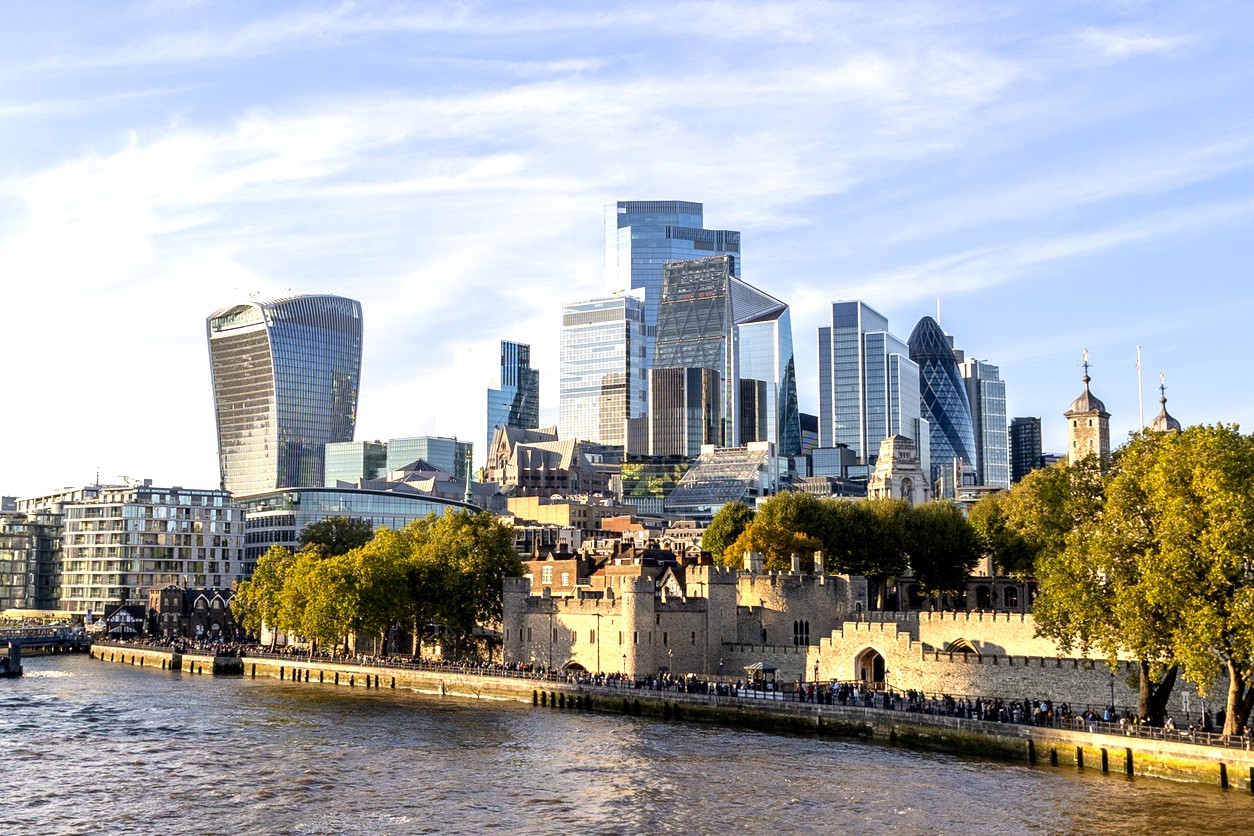
The office is dead; it was declared as the pandemic forced the doors of offices and workplaces of all kinds around the world to shut.
Many office workers found they adapted quickly to working from home and came to love the newfound freedom and autonomy. Some did not, of course, and this varied depending on job role, sector, seniority, personality type, living situation, and other factors.
As restrictions lifted, there was no flood of employees returning to the office, far from it.
There was the ongoing debate, which still rumbles on, about whether people should be expected or even forced to work in an office, about whether humans work better in an office or at home. Again, there are a number of variables, and there is no set answer.
Return-to-office (RTO) policies across companies and sectors varied considerably: some allowed employees to work remotely forever, some attempted a full-time return to the office, and many adopted a hybrid approach, with policies undergoing several modifications.
Certain sectors, for instance, banking and finance, were eventually relatively aggressive in their RTO policies. JPMorgan Chase announced a five-day, full-time return-to-office mandate in January 2025, with enforcement beginning in March 2025, and Revolut scrapped ‘remote-first’ working for graduate hires in June 2026, and many other sectors followed suit. However, many companies across sectors did offer flexibility in their policies, even the ardent in-office proponents. JPMorgan Chase let their staff work remotely for the 2026 World Cup, for instance.
Whilst there are many variables that can be examined in the debate between in-office and remote work, the Harvard Business Review surveyed 1,200 professional knowledge workers in 2026 and found that overall workplace productivity was significantly higher in office environments than it was working from home, due to greater collaboration amongst fellow team members, more interaction, and shared problem-solving.
In March 2026, a study by Remit found that average UK office attendance was ‘settling’ at the highest level since before the pandemic, with attendance figures above 40% every week since early January.
Lorna Landells, a partner at Remit and a co-author of the report, observed: “Office attendance is no longer in freefall nor in recovery mode; it is settling. Employees are more open to being in the office, but only where it feels purposeful and workable. Flexibility is no longer a perk; it is the baseline.”
She went on to say that the study’s results showed a shift in focus among occupiers, investors and developers. “The question is no longer whether people will return to the office but what kind of office experience genuinely supports the way people now work. As expectations stabilise, the quality, functionality and clarity of workplace design are set to play an increasingly decisive role in driving attendance.”
So the office is far from dead, the office is very much alive, but in many cases, it needed to undergo a serious makeover, glow-up and upgrade.
Levels of Leasing of London Office Space
This is backed by activity levels in the Central London office market. It was reported in 2026 that there was 11.5 million square feet of space taken up by way of letting in Central London in 2025, up 5% on the five-year average.
The total annual take-up in the West End for 2025 reached 3.27 million square feet, a 7% decrease on the five-year average.
The West End includes Covent Garden, Fitzrovia, Marylebone, Mayfair, Soho and St James’s.
In the City of London in 2025, total office space take-up reached 5.31 million square feet, representing a 0.95% year-on-year increase.
In Canary Wharf, annual take-up in 2025 was 1.10 million square feet, nearly triple 2024’s total.
Occupier demand for Best-in-Class Office Space in London
There is now what has been termed a ‘flight to quality’ amongst occupiers in the London office market, as there is across all major office markets globally.
Employers want best-in-class office space that encourages employees to return to the office, improves productivity and attracts top talent.
This means space with excellent occupier amenities and ideally space with a very high WELL Rating, a scoring system administered by the International WELL Building Institute, which is an evidence-based, third-party verified framework that helps building owners and operators manage and optimise facility operations — focusing on 10 core concepts: Air, Water, Light, Nourishment, Movement, Thermal Comfort, Sound, Materials, Mind, and Community.
Occupiers also want to be in a space that is sustainable and environmentally friendly and aligns with their own environmental, social and governance (ESG) credentials. This means office space with highly commendable ratings from BREEAM (Building Research Establishment Environmental Assessment Method), LEED (Leadership in Energy and Environmental Design), and NABERS UK (National Australian Built Environment Rating System), or ideally all three.
In fact, sustainable office space is no longer a preference but a requirement. Under the UK’s Minimum Energy Efficiency Standards (MEES), since 1st April 2018, it has been illegal to rent out office premises with a low energy rating. From 1st April 2023, existing leases became unlawful if the premises have a low rating. A low rating is an EPC (energy performance certificate) of ‘F’ or ‘G’.
However, it was announced in June 2026 that from 2031, all commercial buildings above 1,000 square metres (10,764 square feet) must achieve a minimum EPC rating of B, subject to some exemptions.
London’s Prime Office Space Rental Levels
Buildings that offer high occupier amenity levels and excellent overall ESG credentials are London’s best-in-class or prime office spaces.
The increased demand and competition for this space have created an ongoing upward pressure on prime office rents.
Prime headline rents in the City of London and Southbank increased to £91 per square foot by the end of Q4 2025, up by 5% year on year.
Prime headline rents in the West End at the end of Q4 2025 increased to £170 per square foot, increasing for the sixth consecutive quarter.
Prime office rent in Canary Wharf and Docklands was at £57.50 per square foot, in Kings Cross and Euston, £95 per square foot, in Midtown, best-in-class space was achieving £85 per square foot, and record headline rents were observed across all other submarkets, including Knightsbridge and Chelsea, Paddington and Victoria.
In Q1 2026, driven by a severe shortage of premium workspace and relentless occupier demand, The Financial Times reported that City of London prime office rents were closing the gap on the West End, reaching an average of £130.80 per square foot compared to £165 per square foot in the West End.
London’s Best-in-Class Office Vacancy Rates
These rents are being pushed due to low prime stock, and the flight to quality, which has turned into a fight for quality, is perpetuating the shortage.
Overall vacancy rates, which covered space of varying quality, were relatively low. At the end of Q4 2025, the City vacancy rate remained at 7.0%, on par with the 10-year long-term average, whilst the West End market saw a slight contraction in supply, bringing the vacancy rate down minimally from the previous quarter to 7.8%.
In the West End, the overall vacancy rate in the prime locations of Mayfair and St James’s at the end of Q4 stood at 4.1% and was down 1% on the 10-year average.
Notably, prime office vacancy rates in Central London remained very tight, falling to 1-3% for top-tier, BREEAM-certified Grade A office spaces in key districts.
Due to the unprecedented pressures developers have faced since the pandemic, they have struggled to keep up with demand, as reflected in the development pipeline data.
London’s Office Development Pipeline
Development completions in Central London reached 1.4 million square feet, with nine schemes reaching practical completion by Q1 2026. This total was down 25% over the same period a year earlier. The largest scheme to be completed was GPE’s 321,000-square-foot 2 Aldermanbury Square in the EC2 district of the City, which was fully pre-let to law firm Clifford Chance.
Pre-letting activity remained strong in the London market in Q1 2026, and 61% of new office space delivered in the quarter was let prior to practical completion.
A further 7.1 million square feet were expected to be completed in 2026, bringing the annual record to 8.5 million square feet of new office space. However, around two‑thirds of this space had already been pre-let.
It was predicted that development completions would reach 22 million square feet by the end of 2029, with 1.4 million square feet of schemes having started in Q1 2026.
The Wait for London’s Best Office Space
An example of a building whose construction is due to start in 2028, after ground clearance works are completed, is 1 Undershaft, which was renamed One London in June 2026.
To be developed by Aroland Holdings and Stanhope, the 74-storey tower would be the City of London’s tallest tower and the joint-tallest building in London and Western Europe, with The Shard upon completion in 2033.
Delivering 1.2 million square feet of space between the ‘Gherkin’ at St Mary Axe and The Leadenhall Building, it would also provide 111,000 square feet of amenity space for tenants, a 400-seat double-height auditorium on Levels 9 and 10, and a tenant entertaining area and bar – the highest bar in London, on Level 71. There would be private occupier terraces on Levels 30 and 48. On the lower ground floor, there would be a lounge, bar, wellness suite, and fitness space with planned facilities for cyclists.
Also in the plans are two major terrace areas: a cantilevered public garden on Level 11 and an apex viewing gallery space operated by the London Museum
Breathing New Life Into Buildings
As developers have been unable to meet demand for brand-new space, landlords and investors have been looking to deliver high-quality office space by extensively refurbishing existing stock.
It was estimated that comprehensive refurbishments accounted for 70% of the schemes set for delivery in Central London over the next four years (and nearly 80% by square footage). This proportion increased by 5% compared to the first quarter of 2025.
An example of a major refurbishment scheme is 65 Gresham Street, where global investment management firm Squarepoint signed a 20-year lease in Q1 2025, with completion due in 2028.
The 400,000-square-foot building is being developed by institutional investors advised by J.P. Morgan Asset Management and will be one of the largest building reuse projects in the City of London, avoiding demolition through large-scale reuse and regeneration.
The all-electric office building targets a 66% reduction in whole-life and operational carbon and includes an extension of the existing structure to create the new office scheme, which will have four new floors, 26,000 square feet of roof terraces, and best-in-class end-of-trip facilities.
The agreement will see Squarepoint move out of its current home at Citypoint, the Moorgate-based building that was BP’s former headquarters.
The Increased Adoption of Managed Office Space in London
With the shortage of leased office space and rising prime rents, occupiers have increasingly been looking to the flexible office space sector for options.
This is also partly due to tenants of leased office space being vulnerable to the same increased costs that developers face, including fit-out costs at the start of the lease and dilapidations at expiry.
Occupiers of flexible office space, such as private serviced offices and managed offices, however, are not responsible for fit-out or dilapidations.
Leasehold tenants must also pay for property-related overheads, including service charges, utilities, cleaning, reception, maintenance, and security staff costs, kitchen and bathroom sundries, and so on. However, these items are covered by the all-inclusive rental terms of serviced or managed offices.
Among the flexible office and workspace options available in London, managed offices are experiencing the fastest growth.
There has been significant growth in demand for managed office space, also referred to as fitted or furnished offices and Cat B office space, over the past three years.
Managed offices sit between traditionally leased offices and serviced offices. They offer greater autonomy and longer terms than serviced offices, yet greater agility than leased space.
They suit larger requirements than those a serviced office can typically satisfy, often matching the size of space a lease could offer, and can provide space for 20 to 2,000 desks.
Branded managed offices in London often incorporate a custom fit-out, an occupier’s own front door and bespoke service packages.
In Q1 2026, it was reported that there were 83,000 managed office leads for Central London in 2025, which was a 23% increase on 2024’s figure and a 65% increase on 2023’s total.
As we publish this article, the conflict in the Middle East that began in February remains unresolved, and the UK is effectively without a Prime Minister, creating ongoing uncertainty and pressure for developers.
However, as the market has demonstrated throughout all unprecedented national and global events since 2020, the flight to quality in the London office market will continue.